A clear process for stories that need more than a nice image.
A clear process for storiest hat need more than a nice image.
Before I design, I look at what the story needs to communicate.
What should people notice first?
What makes it specific?
What should be felt before everything is explained?
What is the human, strange or meaningful detail?
And how can the visual direction grow across different formats?
The result is not just one nice image in a style I repeat. It is a visual direction shaped by the story itself, with illustration, colour, type and design working together.
So the final work feels specific, thoughtful and easy to recognise.
Before I design, I look at what the story needs to communicate.
What should people notice first?
What makes it specific?
What should be felt before everything is explained?
What is the human, strange or meaningful detail?
And how can the visual direction grow across different formats?
The result is not just one nice image in a style I repeat. It is a visual direction shaped by the story itself, with illustration, colour, type and design working together.
So the final work feels specific, thoughtful and easy to recognise.
/
PROCES
A clear process for storiest hat need more than a nice image.
Before I design, I look at what the story needs to communicate.
What should people notice first?
What makes it specific?
What should be felt before everything is explained?
What is the human, strange or meaningful detail?
And how can the visual direction grow across different formats?
The result is not just one nice image in a style I repeat.
It is a visual direction shaped by the story itself.
With illustration, colour, type and design working together.
So the final work feels specific, thoughtful and easy to recognise.
Before I design, we define what the packaging needs to communicate.
What should people notice first?
What makes the product different?
How does the story become visible before tasting?
And how can the visual direction grow across more flavours, origins or formats?
The result is not just one nice pack.
It is a visual direction with a reason behind it.
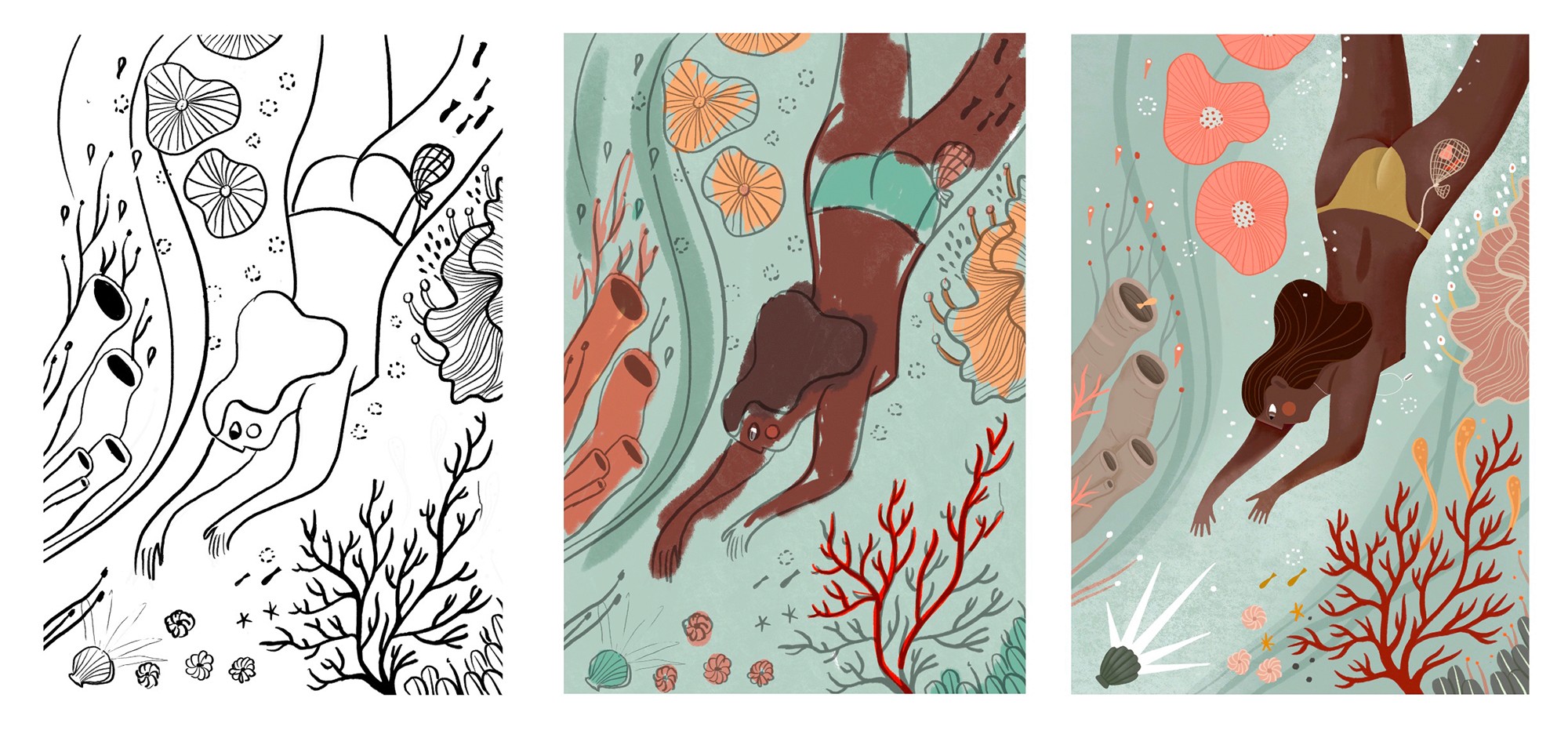
The steps
Sketch for Peter Print Sample book
Sketch for Peter Print Sample book
Peeze packaging illustration
/
Process
/
Process
The steps
The steps
1
Discover
We start with your story, publication, article, research project, product or brand. I listen for what is already there, and what is not visible yet.
We start with your story, publication, article, research project, product or brand. I listen for what is already there, and what is not visible yet.
We start with your story, publication, article, research project, product or brand. I listen for what is already there, and what is not visible yet.
2
Define
Together we find the angle. What should people notice, understand or feel first? This becomes the visual brief.
Together we find the angle. What should people notice, understand or feel first? This becomes the visual brief.
Together we find the angle. What should people notice, understand or feel first? This becomes the visual brief.
3
Create
I translate the angle into visual directions using illustration, colour, composition, type and design ideas.
I turn that angle into visual directions. Illustration, colour, typography and packaging ideas. You get two or three routes to react to. This is where it starts to feel real.
I translate the angle into visual directions using illustration, colour, composition, type and design ideas.
The steps
4
Refine
We shape the strongest direction together. I sharpen hierarchy, rhythm, atmosphere and detail until it feels clear and specific.
We shape the strongest direction together. I sharpen hierarchy, rhythm, atmosphere and detail until it feels clear and specific.
We shape the strongest direction together. I sharpen hierarchy, rhythm, atmosphere and detail until it feels clear and specific.
5
Apply
The visual direction comes to life in the right format: cover, illustration, packaging, campaign, publication or brand asset.
The visual direction comes to life in the right format: cover, illustration, packaging, campaign, publication or brand asset.
The visual direction comes to life in the right format: cover, illustration, packaging, campaign, publication or brand asset.
6
Ready
You receive final files and clear guidance, ready for print, web, publication, launch or production.
You receive final files and clear guidance, ready for print, web, publication, launch or production.
You receive final files and clear guidance, ready for print, web, publication, launch or production.

/
Style
Not one fixed illustration style.
The story decides the shape.
Every project asks for something different.
A healthcare article, a thesis cover, a product story or a children’s book all need their own visual language.
So I don’t start with a look.
I start with the story, the audience, the feeling and the detail that needs to be seen first.
From there, the style follows.
/
Style
Not one fixed
illustration style
Every project asks for something different.
A healthcare article, a thesis cover, a product story or a children’s book all need their own visual language.
So I don’t start with a look.
I start with the story, the audience, the feeling and the detail that needs to be seen first.
From there, the style follows.
/
Style
Not one fixed
illustration style
Every project asks for something different.
A healthcare article, a thesis cover, a product story or a children’s book all need their own visual language.
So I don’t start with a look.
I start with the story, the audience, the feeling and the detail that needs to be seen first.
From there, the style follows.
Curious how this works in real projects?
Every story asks for its own visual direction. Here are projects where ideas, research, products and publications became images people can understand, feel and remember.
Curious how this works in real projects?
Every story asks for its own visual direction. Here are projects where ideas, research, products and publications became images people can understand, feel and remember.